Muscle loss is a natural part of aging, especially after the age of 50. This gradual decline in muscle mass is known as “Sarcopenia”, and it often begins as early as your 30s due to hormonal changes, reduced testosterone levels, and lower physical activity. However, experts say the right Morning Exercise Routine can help slow down or even reverse this decline.
Fitness specialists recommend starting the day with compound strength exercises that target multiple muscle groups at once. These movements stimulate muscle fibers, improve balance, and maintain functional strength needed for everyday activities. Consistency and proper form are more important than lifting heavy weights—especially for men over 50.
Below are five expert-recommended Morning Workouts for Men Over 50 that can help rebuild muscle and improve overall strength.
1 – Half-Kneeling Shoulder Press (Upper Body Strength)
The Half-Kneeling Shoulder Press is an effective exercise for improving shoulder stability, core engagement, and upper-body strength. This move also helps protect joints while building muscle.
How to perform –
- Kneel on one knee with your torso upright.
- Hold a dumbbell at shoulder level.
- Press the weight overhead while keeping your core tight.
- Slowly lower the dumbbell back to shoulder level.
- Perform 3 sets of 10 reps per arm.
| Exercise | Target Muscles | Recommended Sets |
|---|---|---|
| Half-Kneeling Shoulder Press | Shoulders, Core, Triceps | 3 × 10 reps |
Keywords: Shoulder strength, upper-body workout, morning fitness routine.
2 – Reverse Lunges (Leg Power & Balance)
Reverse Lunges strengthen the glutes and quadriceps while putting less stress on the knees compared to forward lunges. They also improve coordination and lower-body stability.
Steps –
- Stand with feet hip-width apart.
- Step one foot backward and bend both knees to about 90 degrees.
- Push through the front heel to return to standing.
- Alternate legs.
| Exercise | Main Benefits | Reps |
|---|---|---|
| Reverse Lunges | Leg strength, balance, mobility | 3 sets × 8 reps each leg |
3 – Lateral Band Walks (Hip Stability)
Resistance bands are excellent tools for strengthening stabilizing muscles. Lateral Band Walks specifically target the hips and glutes—areas that weaken with age.
How to do it –
- Place a resistance band around your ankles or thighs.
- Slightly bend your knees.
- Step sideways slowly while maintaining tension in the band.
| Exercise | Muscles Targeted | Recommended Volume |
|---|---|---|
| Lateral Band Walk | Glutes, Hip muscles | 4 sets × 12 steps each side |
4 – Band Face Pulls (Posture & Upper Back)
Poor posture becomes common as people age, often due to weak upper-back muscles. Band Face Pulls help strengthen the shoulders and upper back while improving posture.
Steps –
- Attach a resistance band to a stable object.
- Hold the band handles and step back until tension forms.
- Pull the band toward your face while squeezing your shoulder blades.
| Exercise | Primary Benefit | Sets |
|---|---|---|
| Band Face Pull | Posture improvement | 2 × 15 reps |
Keywords: Upper-back workout, posture correction exercises.
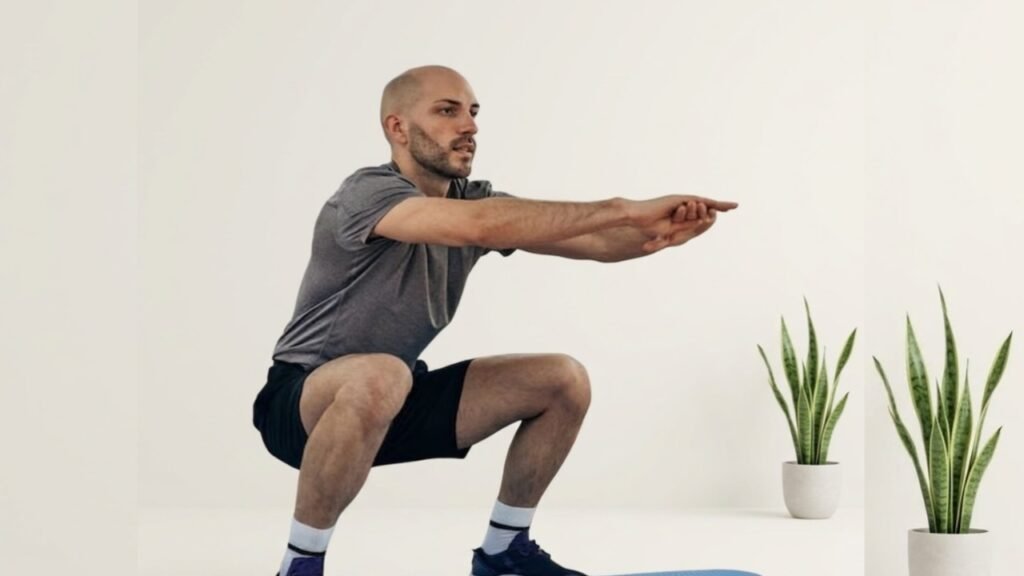
5 – Wall Sit (Lower-Body Endurance)
The Wall Sit is a simple yet powerful exercise that builds endurance in the quadriceps and strengthens the lower body.
Instructions –
- Stand with your back against a wall.
- Slide down until your knees form a 90-degree angle.
- Hold the position as if sitting in a chair.
| Exercise | Focus Area | Duration |
|---|---|---|
| Wall Sit | Quads, glutes, endurance | Hold 45 seconds × 3 rounds |
Why Morning Exercise Matters After 50
Morning workouts activate muscles, improve circulation, and prepare the body for daily movement. Studies suggest that short but consistent strength sessions can help maintain muscle mass, support joint health, and improve balance as people age.
Regular exercise also boosts metabolism, supports bone density, and helps maintain independence later in life. When paired with proper nutrition and adequate sleep, these routines can significantly slow down muscle loss.
Men over 50 should focus on controlled movements, proper posture, and consistency rather than heavy lifting. Performing these exercises a few mornings each week can help rebuild strength, maintain mobility, and support long-term health